Call Now for Trusted Plumbing Service
Understanding regional building codes and state amendments
Building in Franklin, Cashiers, and Highlands requires strict adherence to the North Carolina State Plumbing Code, which adopts the International Plumbing Code with specific state amendments. Contractors working at higher elevations, particularly in Highlands where projects frequently exceed 4,000 feet, face unique pressure regulation challenges that require pressure-reducing valves on incoming water lines when municipal pressure exceeds 80 psi. The region’s frost line depth of 12 inches demands that all exterior water supply lines be installed at least 18 inches below grade to prevent winter freeze damage.
Local building departments in Macon and Jackson counties enforce additional requirements for backflow prevention devices on irrigation systems and outdoor fixtures, reflecting the area’s commitment to protecting mountain watershed quality. General contractors must submit detailed plumbing plans showing fixture counts, drain sizing calculations, and vent configurations before permits are issued. The permitting process typically requires two to three weeks for plan review, with inspectors paying close attention to proper slope on drain lines and adequate venting for fixtures installed in multi-story mountain homes.
Understanding these regional variations prevents costly delays during construction. Builders who partner with licensed professionals familiar with local code enforcement patterns avoid common mistakes like undersized vent stacks or improperly sloped drain lines that fail rough-in inspections. These requirements exist to ensure long-term system performance in the challenging mountain climate where temperature swings and seasonal weather patterns place additional stress on residential systems.
Proper sizing and material selection for mountain region installations
Water supply systems in western North Carolina must account for variable source pressures, whether connecting to municipal lines or private well systems. Franklin projects connecting to town water typically receive 65 to 75 psi at the meter, while Cashiers and Highlands developments often rely on community water systems with pressures ranging from 45 to 90 psi depending on elevation relative to storage tanks. This variability requires careful sizing of distribution piping to maintain adequate pressure at all fixtures while preventing excessive velocity that causes water hammer.
Current code requires Type L copper or PEX tubing for supply lines, with PEX becoming the preferred choice for mountain construction due to its flexibility and superior freeze resistance. Trunk lines serving multiple fixtures should be sized at three-quarter inch minimum, with half-inch branches adequate for individual fixtures. Contractors must install water hammer arrestors at quick-closing fixtures like washing machines and dishwashers, a requirement frequently cited during rough-in inspections. All horizontal supply runs require a minimum quarter-inch per foot slope back toward shutoff points to allow complete system drainage during winterization.
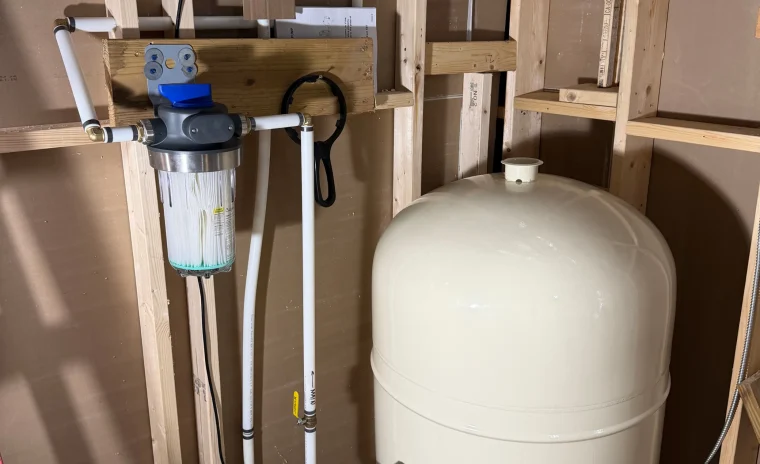
Well-supplied homes require additional components including pressure tanks sized according to pump capacity, whole-house sediment filtration to protect fixtures from mountain watershed particulate, and dedicated electrical circuits for pump operation. The region’s mineral-rich groundwater often necessitates water softening systems, which must be installed downstream of the pressure tank with dedicated drain connections. Proper system design prevents the low-pressure complaints and premature fixture wear that plague poorly planned installations in this demanding environment.
Critical considerations for waste systems in mountain construction
Drain, waste, and vent systems must be designed with precise attention to slope and sizing to function reliably in mountain topography. The code mandates quarter-inch per foot slope for pipes up to three inches in diameter and one-eighth inch per foot for larger lines. In homes built on sloped lots common throughout the region, achieving proper drainage fall while maintaining adequate cover depth requires careful planning during the foundation phase. Underslab drains must be positioned before concrete pours, with cleanout access points located within 50 feet of each horizontal drain run change of direction.
Venting presents particular challenges in multi-story construction typical of mountain homes built to capture views. Every trapped fixture requires proper venting, either through individual vents extending through the roof or wet venting configurations allowed under specific conditions. Common mistakes include inadequate vent sizing for fixture groups and improper horizontal wet vent runs that violate flood rim requirements. Inspectors in this region consistently check that vent terminals extend at least six inches above rooflines and are positioned away from soffit vents and operable windows to prevent sewer gas intrusion.
Septic system connections require special attention in areas outside municipal sewer service. Cashiers and Highlands properties frequently use advanced treatment systems due to challenging soil conditions and sensitive watershed protection requirements. Contractors must coordinate with certified septic installers to ensure proper drain line elevation and cleanout access before final grading. These connections must be tested and photographed during rough-in inspection since they become inaccessible once backfilled. Building on the expertise available through professional installation services ensures waste systems are designed correctly from the start, preventing expensive excavation and repair work after occupancy.
Navigating the approval process with confidence
Successfully completing a project in Franklin, Cashiers, or Highlands requires passing three critical inspection stages: rough-in, final, and sometimes an intermediate pressure test. Rough-in inspection occurs after all supply, drain, and vent lines are installed but before walls are closed. Inspectors verify proper pipe sizing, correct slope on drains, adequate support spacing, proper vent configurations, and correct installation of shower pans and tub surrounds. This inspection cannot proceed until the system passes a water or air pressure test, typically holding 50 psi air pressure for 15 minutes without loss, demonstrating leak-free installation.
Documentation requirements extend beyond simple permit posting. Contractors must maintain records of material certifications, pressure test results, and any approved plan deviations throughout construction. Digital photographs of concealed work provide valuable protection should questions arise during final inspection or after closing. Many jurisdictions now require trench depth verification photos for underground supply and sewer lines before backfilling. Final inspection occurs after fixture installation, with inspectors confirming proper operation of all drains, adequate hot water delivery, correctly functioning fill and flush valves, and proper installation of required backflow prevention devices.
Building officials in mountain counties have little tolerance for repeat offenders who consistently fail inspections due to poor workmanship or code ignorance. General contractors protect their reputations and project timelines by working with established professionals who maintain excellent inspection pass rates. Preparation for each milestone includes confirming all required components are installed, testing is complete, and access is clear for inspector evaluation. This disciplined approach prevents the two to three week re-inspection delays that derail construction schedules and erode contractor credibility with clients expecting timely project completion.
Why builders choose experienced local installation partners
Contractors building in western North Carolina face enough scheduling challenges without adding preventable delays from failed inspections or improperly designed systems. All American Plumbing Of Clayton brings decades of regional experience to every project, understanding the specific requirements enforced by building departments across Macon and Jackson counties. Their team stays current with code amendments, maintains strong working relationships with local inspectors, and designs systems that pass rough-in and final inspections on the first attempt. This reliability matters when construction loans carry daily interest costs and clients expect move-in dates to be honored.
Beyond basic code compliance, experienced professionals provide value engineering that helps builders control costs without sacrificing quality. Proper system sizing prevents the over-building that wastes client money and the under-sizing that creates performance complaints after closing. Their familiarity with local supply houses and material availability prevents the parts delays that halt progress, while established relationships with inspectors facilitate scheduling during peak construction seasons when inspection slots fill weeks in advance. Projects benefit from precise coordination between foundation work, framing schedules, and fixture installation milestones that keep construction flowing smoothly from groundbreaking to certificate of occupancy.
General contractors and builders who prioritize long-term reputation over short-term cost savings recognize that quality installation work protects their brand. Systems installed correctly the first time generate zero callback complaints, eliminate warranty claims, and produce referrals from satisfied homeowners. All American Plumbing Of Clayton serves Franklin, Cashiers, and Highlands with the same commitment to quality workmanship that has built their reputation throughout the region. Builders ready to ensure their next project meets code requirements and exceeds client expectations should schedule a consultation to discuss design requirements and project timelines. The difference between a smooth construction experience and a troubled one often comes down to choosing installation partners who understand what compliance really means in mountain building environments.